



Potty on Cue: How Guide and Service Dogs Learn to "Do Your Business" (and How Yours Can)
Guide and service dogs learn to go to the bathroom on a single cue. How three schools teach it, the steps for your own dog, how to choose your cue, and the mistake that can sour it.
November 11 is Veterans Day, and some of the veterans it honors will spend it with a guide dog or service dog at their side. The Department of Veterans Affairs does not supply those dogs. It refers approved veterans to accredited training organizations, and, for veterans it approves for a dog, it helps cover veterinary care for guide dogs and for hearing and mobility service dogs. To every veteran, and to the dogs and puppy raisers behind them: thank you.
Dogs Inc, a Florida school that places service dogs with veterans, says its service dogs learn 15 to 20 advanced skills, like helping interrupt a panic attack. Long before that, as puppies, they learn a humbler one: going to the bathroom when asked. Your dog can learn it too.
The short answer
Guide and service dog schools say a set phrase, like "Do your business!" or "busy busy," while a puppy is already going, then praise. Repeat that for days or weeks and the phrase becomes a request. Pet dogs learn it the same way. Afterward, let the fun continue, so the cue never means the walk is over.
What the guide dog schools teach
We read the puppy-raising guidance from three schools. The words differ. The method barely does.
- Guide Dogs for the Blind uses "Do your business!" Its puppy-raising guidebook has raisers say it as the puppy starts to pee or poop, repeating the pairing often until the phrase alone can prompt the act. Then raisers "throw them a little party."
- CNIB Guide Dogs, in Canada, uses "busy, busy." Its relieving guidelines have raisers repeat it once or twice in a calm, upbeat voice while the puppy goes, then reward with food, praise, petting or play.
- Dogs Inc, formerly Southeastern Guide Dogs, uses "busy busy." Its training tip says to say it calmly right as the puppy begins, with the raiser standing still. Then the puppy hears "Good busy!" and may get a small treat too.
The schools also get picky. CNIB wants its puppies to go on leash, in a small area, on a hard surface, and never mid-walk. Guide Dogs for the Blind practices on concrete and asphalt because many dogs prefer grass, and it wants maturing pups to relieve within 10 minutes of being given the chance. Our guess at why: a working dog has to go when and where its person needs it to, not whenever it finds the perfect lawn.
Why your dog should learn it too
Trainer Sassafras Patterdale (CPDT-KA) makes the case for every dog in her American Kennel Club guide. Between her list and Dogs Inc's:
- Bad weather. Less time standing in the sleet. If your dog flat-out refuses in the rain, see my dog won't poop in the rain.
- Travel and unfamiliar places. A rest stop counts. Our road trip and travel guide covers what to pack.
- Before a building or an appointment. At the vet, it helps if you are asked for a urine or stool sample.
- Senior dogs who use an indoor potty, and any dog who needs a potty pad during bad weather or illness, the AKC adds.
- When time is short. Ask anyone who has ever had a flight to catch.
How to teach it, step by step
The AKC calls the method "capturing": you attach a word to something your dog already does every day. That also means it is not just for puppies.
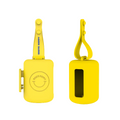
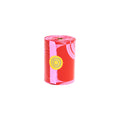
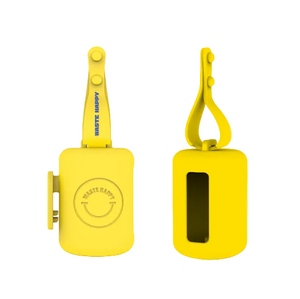
- Set up by the door. CNIB tells raisers to keep the leash and poop bags there, and says it helps to open a bag before you head out. (Or clip a dispenser to the leash.) Add a pocket of treats.
- Go out when it is a sure thing: after a nap, a meal, a drink or play. Our puppy poop schedule covers how often to expect it.
- Stand still and stay quiet while your dog sniffs for a spot.
- Add the word mid-act, never before. The schools say it as the puppy starts. Patterdale suggests saying it near the end at first, so your voice does not stop your dog early, then moving it to the start once they catch on.
- Praise and treat as they finish. Repeat for days or weeks. The AKC says several days or weeks. Dogs Inc says it may take a week or more before a puppy responds reliably.
- Now ask. Somewhere quiet, give the cue and reward when they go. Patterdale says a dog who understands may "try" even without needing to, with a leg lift or a quick squat. Reward that too. The word has landed.
- Take it on the road. "Dogs are situational learners," the AKC article says, so practice in new places. Our suggestion: if your dog only ever goes on grass, practice on gravel or pavement before a trip.
Picking your word
Any word works, Patterdale says, though she calls separate cues for pee and poop the best setup. Her examples run from "pee" and "poop" to the more discreet "showtime" and "business." The three schools use one phrase for both.
Our take: one cue is simpler, and two let you ask for a urine sample on demand. Either way, pick something you will happily say in a hotel parking lot, and, as Dogs Inc advises, use the same cue each time.
A new wrinkle from the lab. In a study published in Science in September 2026, researchers at Eötvös Loránd University in Budapest recorded brain activity (EEG) in dogs and people listening to streams of speech. In both species, the brain tracked word-level patterns more strongly when consonants, rather than vowels, carried the word structure. The authors say this suggests dogs, like humans, have a consonant bias when they segment the speech they hear into words.
The study did not test cues or training, so this part is purely our inference: a cue whose consonant sounds do not overlap with your dog's name or other cues seems a sensible bet. If your dog is named Bizzy, maybe skip "busy."
Do not let the cue end the fun
This mistake can quietly undo the work. Patterdale points out that time outside is likely a highlight of your dog's day, and warns that rushing inside the moment your dog goes can make the cue mean the fun is over, and your dog may get reluctant to respond. Her fix: follow the potty with "environmental rewards," like a sniff, more walk or a tossed toy.
The schools come at it from the other side. CNIB says not to start a walk until the puppy has gone, and Dogs Inc keeps potty trips and playtime apart so the puppy knows what the trip is for. Our reading: business first, then the good stuff, so the fun is the reward instead of the casualty. (Rain-haters flip this rule, as our rain post explains.)
If it is not clicking
- Check your timing. Dogs Inc's troubleshooting list includes a cue said at inconsistent moments, too many distractions, changes in routine or stress, and accident spots that were not fully cleaned (it suggests an enzymatic cleaner).
- Grass snob? Guide Dogs for the Blind offers a grass-loving pup only hard surfaces for a few weeks, until it goes on them readily again.
- Never scold. All three schools agree. CNIB warns that scolding or startling a puppy over an accident may teach it to go where you cannot see it.
- Rule out health. If accidents keep happening, Dogs Inc says to see your vet to rule out problems like a urinary tract infection. For straining or holding it, our rain post lists the warning signs.
The bottom line
Pick a word, say it while your dog is already going, reward, and repeat until the word can ask on its own. Then let the walk keep going. It is the same skill guide and service dogs learn as puppies, minus the vest.
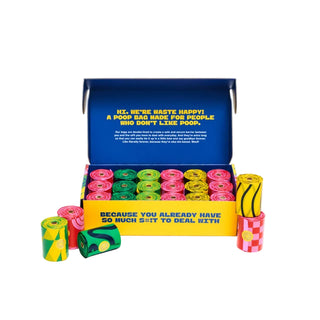
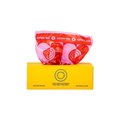
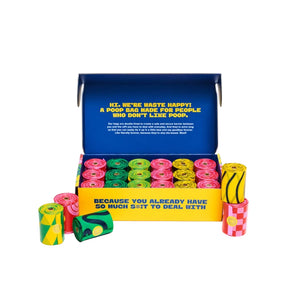
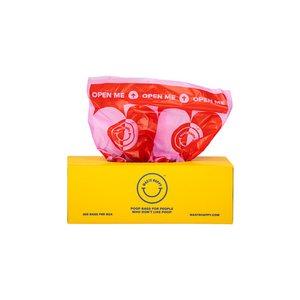
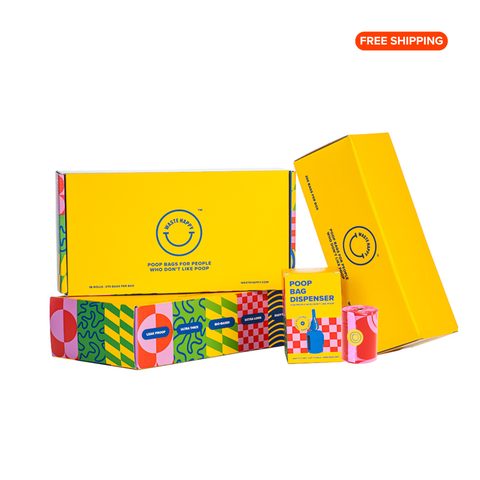
A dog who goes on cue is a dog whose pickups you can see coming. Take the quiz to see how many bags your dog actually needs each month, or grab a box and keep one open by the door, CNIB style.
This article is general information, not veterinary advice. If your dog keeps having accidents, strains to go, or suddenly stops going when it usually would, talk to your vet.
Sources
- US Department of Veterans Affairs, Prosthetic and Sensory Aids Service, Service Dog Veterinary Health Benefit
- Dogs Inc, Service Dogs for Veterans
- Guide Dogs for the Blind, Do Your Business! Teaching Puppies to Relieve on Cue, Puppy Raising Guidebook
- CNIB Guide Dogs, Relieving Guidelines
- Dogs Inc, Training Tip: "Busy Busy" Cue
- American Kennel Club, How to Teach Your Dog to Go Potty on Cue
- Morvai B, Tóth KG, Boros M, Rácz DS, Iotchev I, Szabó K, Andics A. Neural evidence that dogs segment the speech they hear with a humanlike consonant bias. Science, 2026; 393(6818): 1354-1358