












Bright Red Blood in Dog Poop: What It Means and When to Call the Vet
Bright red blood in your dog's poop usually starts low in the gut. What can cause it, which signs mean an emergency, and what to tell your vet when you call.
You bend down with the bag, and there it is: bright red on your dog's poop. Maybe a streak. Maybe a lot more than a streak.
Take a breath. Red blood always deserves a call to your vet, but it does not always mean disaster. Here is how to tell the difference, and the signs that mean you should stop reading and go.
The short answer
Bright red blood, called hematochezia, usually comes from low in the gut: the colon, rectum or anus. Common causes include colitis, stress, eating something they should not, parasites and anal sac trouble. Call your vet whenever you see it. Go now if there is a lot of blood, jelly-like diarrhea, vomiting or weakness, or if a puppy has bloody diarrhea.
What bright red blood is telling you
The American Kennel Club says bright red blood, which vets call hematochezia, usually starts in the lower digestive tract: the colon, rectum or anus. Our plain-language reading: it is still red because it has not been digested yet.
Blood from higher up, in the stomach or small intestine, is a different story. It usually turns poop black and tarry, and it has its own guide: why is my dog's poop black.
The AKC adds that hematochezia looks scary but does not always point to a life-threatening problem. The amount matters, and so does your dog's behavior. Dr. Randy Aronson, a veterinarian quoted by the AKC, describes a mild case as "small streaks of bright red blood in otherwise normal stool, with no change in appetite or energy." Serious cases, he says, "may involve large amounts of blood, dark tarry stool, jelly-like bloody diarrhea, frequent straining, or pure blood without stool."
The common causes
- Colitis and stress. Colitis simply means an inflamed colon. VCA describes the usual picture: frequent, small, soft or liquid poops, straining, and a little bright red blood that often appears toward the end. Mucus often tags along (here is what mucus in dog poop means). VCA ranks stress among the leading causes of this kind of diarrhea, and says most dogs with stress colitis are fine again in three to five days.
- Eating something they should not. Vets call it dietary indiscretion, and it tops the AKC's list of common causes, such as eating spoiled food or sticks. The AKC also suggests skipping table scraps. With the holidays close, here are the Thanksgiving foods that are safe for dogs.
- Parasites. VCA lists whipworms, Giardia and Cryptosporidium among the causes of colitis. Whipworms are the ones to know here: CAPC says some infections bring diarrhea with streaks of mucus and fresh red blood. Your vet can run a fecal test to check. More in worms in dog poop.
- Anal sac problems. The two small scent pouches beside the anus can get plugged and infected. VCA says the fluid inside can turn bloody, an abscess can form, and if it bursts, blood or pus can leak out. Scooting is often the first clue. It is very painful, so even sweet dogs may snap if you touch the area.
- Straining and constipation. VCA notes that hard straining can make some constipated dogs pass a little blood or liquid, and says to call your vet if your dog has not pooped in 48 to 72 hours.
- Bones and sharp objects. The Merck Veterinary Manual says swallowing something sharp, like a bone shard or a needle, can tear the rectum or anus. Signs can include straining, bleeding and a dog who does not want to go.
The serious causes
Acute hemorrhagic diarrhea syndrome (AHDS). You may know it by its old name, hemorrhagic gastroenteritis, or HGE. VCA says it usually strikes without warning in a dog that seemed healthy: vomiting and bloody diarrhea that VCA and the Merck Veterinary Manual both compare to "raspberry jam." Any dog can get it, but small and toy breeds are overrepresented.
The real danger is fluid loss. Merck warns that a dog can go into shock before the dehydration is even obvious. With hospital care the outlook is good: Merck puts the death rate below 10% for hospitalized dogs, and warns it can be high without treatment.
Parvovirus. Parvo is contagious, and it mostly hits young or unvaccinated dogs. VCA lists vomiting, diarrhea that is sometimes bloody, no appetite, listlessness and fever, and says vets should test any unvaccinated puppy that has severe vomiting or diarrhea. Cornell's Baker Institute says puppies 6 to 20 weeks old are hit most often, and notes that parvo is only one of several possible causes of bloody diarrhea or vomiting, and your vet can run tests to check.
The rest of the list. The AKC also names inflammatory bowel disease, pancreatitis, clotting disorders, toxins and cancer. Merck adds rectal polyps (uncommon, usually benign, and quick to bleed) and rectal tumors. Merck also lists clotting problems, such as from rat poison, among the conditions vets rule out with bloody diarrhea. If your dog could have found rat poison, say so right away.

What you see, and how fast to act
Use this as a guide for the phone call, not a diagnosis. The urgency column is our summary of the sources above.
Go now: the emergency signs
Go to a vet right away for any of these. Most are from the AKC; the raspberry jam warning is from Merck and VCA; the puppy warning is from the AKC, VCA and Cornell.
- A lot of blood, large volumes of bloody diarrhea, or blood with no poop at all.
- "Raspberry jam" diarrhea. Red, thick and jelly-like.
- Vomiting. In AHDS, Merck notes the vomiting can start before the bloody diarrhea.
- Lethargy or weakness. VCA says dogs with AHDS can go from lethargic to collapsing.
- Pale gums.
- Refusing food or water.
- A sick puppy, especially an unvaccinated one. Dr. Aronson warns that puppies and small breeds can dehydrate quickly.
If your dog is unvaccinated or might have been exposed to parvo, the AKC says to call ahead before you bring them in, to help limit the spread. After hours, head to an emergency vet.
What to tell your vet, and what to bring
Dr. Aronson says the more you can tell your vet, the more it helps with the diagnosis. Before you call, jot down:
- The color and the consistency. Bright red or dark? Formed poop or runny diarrhea?
- When you first saw it, and whether it has happened more than once.
- Any change in food or surroundings, plus anything your dog may have gotten into: garbage, bones, medications, rat poison.
- Other symptoms and when they started, such as vomiting, appetite changes or signs of pain.
- Vaccine history, especially for a puppy.
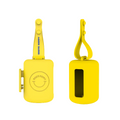
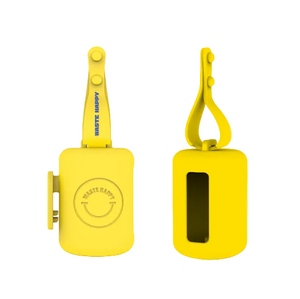
Bring a sample. Dr. Aronson suggests bringing a fresh one, packed in a clean container. Our tip: pick it up with a poop bag, then seal it in a second bag or a lidded container. A quick photo helps too (also our tip).
The bottom line
The color tells you roughly where the blood came from. Your dog's behavior tells you how fast to move. A streak in a happy, hungry dog is a phone call. A lot of blood, raspberry jam diarrhea, vomiting or a sick puppy is a drive. When in doubt, call.
For every other shade, our dog poop color guide has you covered.
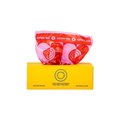
You can only spot a change if you look, and the walk is where you see it first. Take the quiz to see how many bags your dog goes through in a month, or grab a box so there is always one on the leash.
This article is general information, not veterinary advice. If you see blood in your dog's poop, call your vet, and go right away if there is a lot of blood, jelly-like diarrhea, vomiting, weakness or pale gums, or your puppy is sick.
Sources
- American Kennel Club, Blood in Dog Poop: Signs, Symptoms and Treatment, updated January 27, 2026
- Merck Veterinary Manual, Acute Hemorrhagic Diarrhea Syndrome in Dogs, reviewed June 2025
- Merck Veterinary Manual, Disorders of the Rectum and Anus in Dogs
- VCA Animal Hospitals, Acute Hemorrhagic Diarrhea Syndrome in Dogs
- VCA Animal Hospitals, Colitis in Dogs
- VCA Animal Hospitals, Anal Sac Disease in Dogs
- VCA Animal Hospitals, Constipation in Dogs
- VCA Animal Hospitals, Parvovirus in Dogs
- Cornell University College of Veterinary Medicine, Baker Institute for Animal Health, Canine Parvovirus
- Companion Animal Parasite Council, Trichuris vulpis, updated February 28, 2025