




Parvo Spreads Through Poop: What This Year's Outbreaks Mean for Your Dog
Two US shelters paused intake for parvo in the summer of 2026. How the virus spreads through poop, why puppies are most at risk, and which cleaners actually kill it.
In mid-July 2026, Memphis Animal Services in Tennessee paused most new intake to deal with a canine parvovirus outbreak, WMC Action News 5 reported. The pause was set to run through July 21 for extra cleaning and disinfection. In June, a shelter in Edgecombe County, North Carolina, closed to the public through July 6 after confirmed parvo cases among its dogs, WITN reported.
Parvo is not new, and two shelter outbreaks are no reason to panic. The American Animal Hospital Association (AAHA) notes it still turns up in young dogs without protective antibodies, particularly dogs arriving at shelters. And it travels the way most dog trouble does: in poop.
The short answer
Parvo is a tough, highly contagious virus that infected dogs shed in their poop. It can last for months in the environment, and most household cleaners will not kill it. Unvaccinated puppies are most at risk. Finish the vaccine series, pick up promptly, disinfect with diluted bleach, and treat a sick puppy as an emergency.
What parvo is
Canine parvovirus, or "parvo," attacks a dog's gut and white blood cells, the AVMA explains, and in puppies it can also damage the heart. You cannot catch it: the CDC says the parvoviruses dogs get do not infect people. You can carry it, though.
How parvo spreads
A dog gets infected when the virus reaches its mouth or nose, says the Merck Veterinary Manual, either from infected poop or from anything that poop has touched. The AVMA's list includes kennels, bowls, collars, leashes, and the hands and clothes of people who handled a sick dog. Shoes too: Merck lists disinfectant footbaths among the precautions for people caring for infected dogs.
- A trace is enough. The AVMA says even a tiny amount of an infected dog's poop can hold enough virus to infect another dog.
- Dogs shed it before they look sick. Per Merck, shedding starts within 4 to 5 days of exposure, often before any signs, and lasts about 10 days past recovery.
- It lasts. Merck says it can stay infectious for at least two months in a room-temperature home. Outdoors, out of the sun and kept from drying, it can survive many months, maybe years.
Put those together and, as we read it, a healthy-looking dog can leave behind virus that outlasts the pile itself. (Poop is slow to disappear, too: how long dog poop takes to decompose.)
Who is most at risk: the puppy gap
Any dog can get parvo, but the AVMA names these as higher risk: puppies 6 to 20 weeks old, unvaccinated or partly vaccinated dogs, and some breeds, including Rottweilers, Doberman Pinschers, bull terrier breeds, German Shepherds and English Springer Spaniels.
Puppies have a timing problem. A vaccinated mother may pass parvo antibodies to her puppies through her milk, but that protection can fade before the puppy's immune system can take over, and it may also interfere with the vaccine, the AVMA says. AAHA says those antibodies may last 13 to 15 weeks or possibly longer. That is why puppies get a series of shots instead of one.
The vaccine schedule
The AVMA calls the parvo vaccine "core," meaning it is recommended for every dog, usually in a combination shot sometimes labeled DAPP or DA2PP. AAHA's 2022 guidelines set the schedule:
- Puppies: at least 3 doses between 6 and 16 weeks of age, 2 to 4 weeks apart, continuing until the puppy is older than 16 weeks. AAHA prefers continuing to 18 to 20 weeks, particularly where parvo risk is high.
- Boosters: one dose within a year of the last puppy shot, then every 3 years. Yearly parvo boosters are not necessary, AAHA says.
- Dogs first vaccinated after 16 weeks: 2 doses, 2 to 4 weeks apart. Unknown history? AAHA's rule of thumb: "When in doubt, vaccinate."
AAHA adds that unfinished puppy series and mistakes in storing or giving vaccines may explain many or most so-called vaccine failures. Your vet may adjust the schedule.
The signs, and why parvo is an emergency
The AVMA's list of signs: lethargy, loss of appetite, vomiting, severe and often bloody diarrhea, belly pain and bloating, fever or a too-low body temperature, and drooling from nausea. Merck says signs usually start 5 to 7 days after infection (anywhere from 2 to 14), and about a quarter of dogs may have diarrhea without blood. So no blood does not rule parvo out. (More on bright red blood in dog poop and runny poop.)
Vomiting and diarrhea can dehydrate a puppy quickly, and the AVMA says to contact your vet immediately. Cornell's Riney Canine Health Center warns that most dogs with parvo will not survive without treatment. With treatment, Merck puts survival at 70% to 90%, and typically above 90% with aggressive hospital care.
Our suggestion: call ahead and say you suspect parvo, so the clinic can keep your dog apart from others, as the AVMA advises for suspected cases.
Cleaning up: what actually kills parvo
This is where it is easy to go wrong. Cornell says parvo shrugs off most common household cleaners, and Merck says quaternary ammonium disinfectants, often called quats, are not reliable against it.
The fine print: the CDC says to use regular unscented household bleach (5% to 9% sodium hypochlorite; some splashless and laundry bleaches do not qualify), with good ventilation, and gloves or eye protection if needed. Pick up poop and vomit and wash with detergent first, because bleach is not a detergent (ASPCA). For carpet, couches and anything bleach would ruin, ask your vet.
The yard is harder. Cornell's Baker Institute says "you cannot (and should not) bleach your lawn," though rain, watering and sunlight can bring virus levels down over a few weeks. Merck says shaded spots that stay damp can hold it far longer, and that removing contaminated material is important outdoors, where full disinfection is not practical.
Why prompt pickup matters in shared spaces
Dog parks rarely get disinfected. The Baker Institute points out that parks, lawns and even homes usually go undisinfected, so a puppy can be exposed without any warning. As we read it, that makes pickup the main defense on shared grass.
The AVMA says to keep your dog clear of other dogs' poop (here is why some dogs eat it) and to "routinely collect and properly dispose of your dog's feces." In practice:
- Pick up every time, right away. A dog can shed parvo before it looks sick, so our rule is to treat every pile as one that matters. Then bag it and bin it (more on what to do with dog poop).
- Wash up. After contact with a dog that has parvo, the AVMA says to wash your hands and put on clean clothes before touching other dogs.
- Keep a sick dog away from other dogs. Cornell's Riney Center says to isolate a dog with parvo during treatment and for up to 2 weeks after recovery.
Puppies and dog parks: wait for the green light
Until the first vaccine series is done, the AVMA advises caution anywhere dogs gather, from parks and pet shops to classes, daycares, kennels and groomers.
That does not mean a bubble. The American Veterinary Society of Animal Behavior calls the first three months the most important window for socialization, and says puppies can generally start classes as early as 7 to 8 weeks if they had at least one set of vaccines 7 or more days earlier, plus a first deworming (more on worms in dog poop). It also says to avoid dog parks and other places that are unsanitized or busy with dogs of unknown vaccine or health status.
So: a well-run puppy class, yes. The dog park, not yet. Ask your vet when your puppy is cleared, then check what to bring to the dog park. Until then, a young puppy poops a lot (see the puppy poop schedule), and every one is worth picking up.
The bottom line
Finish the puppy series, keep boosters current, and call your vet fast if a puppy starts vomiting or has diarrhea. And pick up every time, everywhere.
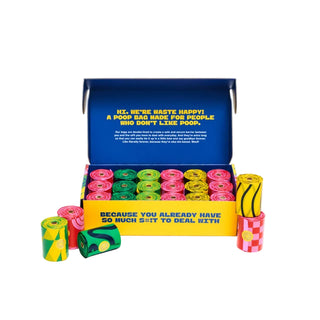
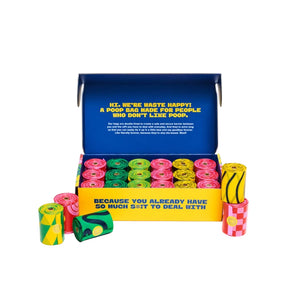
That last part is easier when you never run out. Take the quiz to see how many bags your dog goes through in a month, or stock up so there is always one on the leash.
This article is general information, not veterinary advice. If your puppy or unvaccinated dog is vomiting, has diarrhea (bloody or not), or suddenly seems tired or stops eating, call your vet or an emergency clinic right away.
Sources
- WMC Action News 5, Shelter intake suspended at MAS due to parvo outbreak, July 16, 2026
- WITN, Edgecombe County animal shelter pauses intake due to parvovirus, June 2026
- American Veterinary Medical Association, Canine Parvovirus
- Merck Veterinary Manual, Canine Parvovirus Infection (Parvoviral Enteritis in Dogs), reviewed June 2025
- Merck Veterinary Manual, Cleaning, Disinfection, and Sanitation in Shelter Medicine, reviewed October 2025
- American Animal Hospital Association, 2022 AAHA Canine Vaccination Guidelines: Canine Parvovirus
- American Animal Hospital Association, 2022 AAHA Core and Noncore Vaccines for Dogs (PDF)
- Cornell University College of Veterinary Medicine, Riney Canine Health Center, Parvovirus: Transmission to Treatment
- Cornell University College of Veterinary Medicine, Baker Institute for Animal Health, Canine Parvovirus
- Centers for Disease Control and Prevention, Preventing Parvovirus B19
- Centers for Disease Control and Prevention, Cleaning and Disinfecting with Bleach
- ASPCApro, Using Bleach Properly in Animal Shelters (PDF)
- American Veterinary Society of Animal Behavior, Position Statement on Puppy Socialization (PDF)