


Dog Halloween 2026: The Top Costumes and How to Keep It Safe
Americans will spend $0.92 billion on pet costumes this year, and pumpkin is winning. The 2026 numbers, plus the Halloween rules that keep dogs safe.
Your dog did not ask to be a hot dog. Your dog is going to be a hot dog anyway. You are not alone: according to the National Retail Federation, Americans plan to spend $0.92 billion on pet costumes this Halloween.
Here is what everyone is dressing their pets as this year, and the handful of Halloween rules that actually keep a dog safe.
The short answer
Costumes are fine if your dog tolerates them and can move, see and breathe normally. Keep chocolate and anything sugar-free out of reach, keep your dog away from the front door during peak trick-or-treating, and make sure their ID tag is current. If they eat something they should not, call your vet or poison control right away.
The 2026 pet costume leaderboard
The NRF surveyed 7,889 people in early September about their Halloween plans. The most popular pet costumes:
Whatever you pick, the ASPCA has three simple rules for pet costumes:
- It cannot limit movement, sight, or the ability to breathe or bark. If your dog freezes, flattens or tries to back out of it, the costume is not for them.
- Check for small, dangling or easily chewed-off pieces. Anything that comes off in the mouth is a choking hazard.
- Try it on before the big night. A test run at home tells you whether this is a cute photo or a meltdown.
Plenty of dogs would rather skip the whole thing. A festive bandana or a collar charm counts. Nobody is grading.
The candy bowl is the real danger
Costumes get the attention, but the candy is what sends dogs to the emergency vet.
- Chocolate. The ASPCA says chocolate in all forms can be very dangerous for dogs, and dark and baking chocolate are the worst.
- Anything sugar-free. Sugar-free candy and gum can contain xylitol, which the ASPCA warns can cause serious problems in pets. We explain why in what fruit can dogs eat.
- Raisins. They hide in trail mix and "healthy" treat bags, and grapes and raisins are on every do-not-feed list for a reason. Same article, same warning.
- Wrappers. A dog that eats candy often eats the wrapper too. If yours got into a stash, tell your vet about the packaging as well as the candy.
The fix is boring and it works: keep the candy bowl up high, keep the kids' haul in a closed bag, and do a sweep of the floor after the sorting-and-trading session.
Jack-o'-lanterns, cords and the front door
- Lit pumpkins. The ASPCA points out that pets can easily knock over a lit pumpkin and start a fire. A battery candle solves it.
- Cords. Light-up decorations come with wires, and wires get chewed. Keep them out of reach.
- The pumpkin itself. Plain, cooked pumpkin is a fine dog snack in small amounts. Pie filling is not, because of the sugar and spices.
- The doorbell. Forty doorbell rings, a parade of masks and an open door is a lot for most dogs. The ASPCA recommends keeping pets in a separate, comfortable room away from the front door during peak trick-or-treating hours.
- ID tags. An open door is how dogs get out. The ASPCA calls a pet ID a lifesaver on Halloween, so check that the tag is on and the phone number is current. If your dog is microchipped, make sure the chip registration has your current number too.
The trick-or-treat walk
If your dog is coming along for trick-or-treating, it is a night walk with crowds, so plan it like one.
- Be seen. Glow-in-the-dark and light-up dog gear is everywhere this year, and for once the trend is genuinely useful. A reflective leash or a clip-on light helps drivers spot a dark dog on a dark street. (More on fall walks after dark in can dogs see fall colors.)
- Short leash, especially on November 1. Sidewalks are covered in dropped candy for days after Halloween, and your dog will find all of it.
- Bring more bags than you think. Excitement speeds things up. And nobody wants to find out the hard way on a sidewalk full of kids in costumes. The rules do not take the night off either: it is still your job to pick it up.
Happy Halloween
Dress them up if they are into it, guard the candy like it is yours, and give them a quiet room when the doorbell starts. That is the whole list.
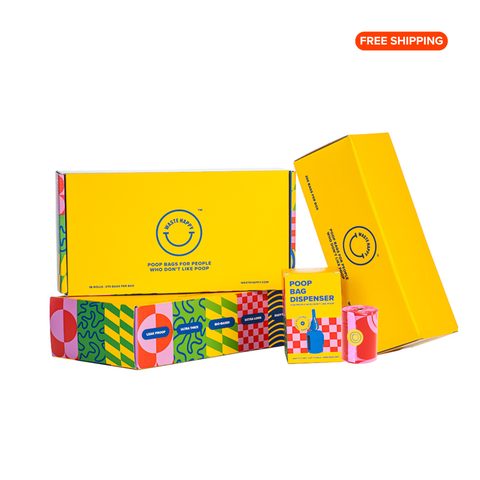
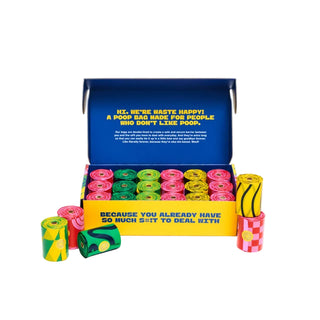
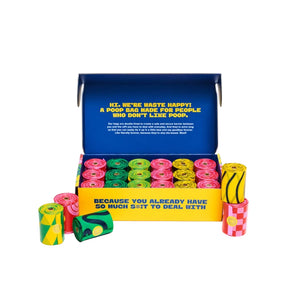
And whether your dog is a pumpkin, a hot dog or a very reluctant ghost, they still need a bag on the walk. Take the quiz to see how many bags your dog actually needs each month, or grab a box before the trick-or-treaters show up.
This article is general information, not veterinary advice. If your dog eats chocolate, sugar-free candy, raisins or anything else you are unsure about, call your vet or the ASPCA Animal Poison Control Center at (888) 426-4435 right away.
Sources
- National Retail Federation, NRF Halloween Survey Shows Consumer Spending Expected to Reach $13.5 Billion, September 22, 2026
- ASPCA, Halloween Safety Tips