



Why Does My Dog Eat Poop? What the Research Says, and What Actually Works
Roughly 1 in 6 dogs is a regular poop eater, and most of them want it fresh. What the research says about why, when to call the vet, and the simplest fix.
It happens fast. One second your dog is sniffing the grass. The next, they are chewing something, wearing a look that says they know exactly what they did. If your dog eats poop, you are not alone, and it does not mean you are doing something wrong.
Here is what the research says about why dogs do it, when it is worth a call to the vet, and the simplest fix: getting there first.
The short answer
Eating poop, called coprophagia, is common. In a UC Davis survey of about 1,500 dogs, 16% were frequent poop eaters, and most went for poop no more than two days old. Rule out medical causes with your vet, then pick it up fast. Deterrent products almost never worked.
How common is it?
More common than anyone admits at the dog park. In surveys run in 2010 and 2011 and published in 2018, researchers at the University of California, Davis asked dog owners, nearly 90% of them in the United States, about their dogs' poop-eating habits. Of the 1,441 owners who answered that question, about 23% had seen their dog eat poop at least once, and 16% had seen it six or more times, which the researchers counted as frequent.
A few other findings worth knowing:
- For most, it is not a puppy phase. Three out of four of the poop eaters were over 4 years old.
- More dogs, more poop eating. Dogs in homes with two or more dogs were the most likely to do it.
- Some breed groups do it more. Terriers and hounds were the most likely groups. Shetland Sheepdogs stood out: 41% were poop eaters, against 17% of other breeds.
- It is not a house-training failure. Frequent poop eaters were just as easy to house train as other dogs.
- Food type did not seem to matter. The researchers found no link between poop eating and the kind of food the dogs were fed.
Why do dogs eat poop?
Nobody knows for certain, but the UC Davis team has a theory. Wolves keep their dens clean, and the researchers suggest dogs inherited a tendency to eat fresh feces near where they live, before any parasite eggs in it have time to become infective. The finding that most poop eaters go for fresh poop fits that idea. The authors call the explanation tentative, so treat it as an educated guess, not a fact.
The American Kennel Club lists everyday reasons, too:
- Isolation or confinement. Dogs left alone or shut in for long stretches are more likely to start.
- Anxiety, including anxiety from being punished during house training.
- Attention. Few things get a human off the couch faster.
- Food nearby. Feeding a dog close to where they poop can blur the line.
- A sick or elderly housemate. Some dogs eat the poop of a sick or older dog in the home.
Puppies are their own category. A new mother eats her puppies' poop to keep the litter clean, usually for about three weeks, and puppies explore the world with their mouths. The AKC says most puppies outgrow it by around nine months. If you have a new puppy, our puppy poop schedule helps you be there when it happens.
When to check with your vet
Most poop eating is behavior, but not all of it. The AKC lists medical causes that can drive it: parasites, steroid medications, malabsorption problems, diabetes, Cushing's disease and thyroid disease, along with diets that fall short on nutrients or calories.
Call your vet if the habit starts suddenly in an adult dog, or if it shows up alongside weight loss, a bigger appetite than usual, vomiting, or changes in their poop such as diarrhea. Those signs are worth a look whatever the cause.
What does not work
This is the part of the study that surprised us most. Owners in a second UC Davis survey had tried a long list of products meant to make poop taste bad. The most-used product was tried by 352 owners and worked for 1% of them. None of the eleven products in the survey did better than 2%.
To be fair, the researchers did not check how closely owners followed the label directions. Still: 1%.
Training methods did not do much better. Owners reported 1% to 2% success for most of them, and 4% for teaching "leave it." Punishment is a bad idea for a different reason: the AKC lists anxiety, including anxiety from punishment during house training, as one of the causes.
The simplest fix: get there first
If most poop eaters want it fresh, the simplest fix is making sure there is no fresh poop to find. That is our reading of the research, not something the study tested, and it lines up with the AKC's own advice: pick up after your dog immediately.
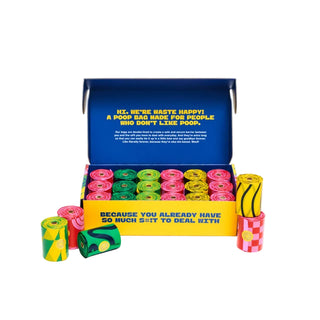
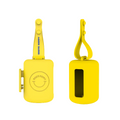
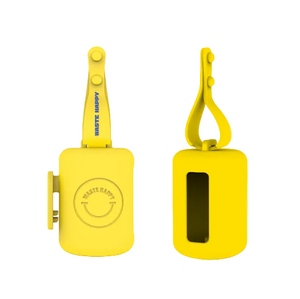
- Pick it up right away. On walks, have a bag out before your dog finishes. A dispenser clipped to the leash makes that easy (here is how to attach one).
- Clear the yard every day. The CDC says to pick up pet waste daily. In a multi-dog house, check more often. Here is how multi-dog homes keep up.
- Use the leash where poop is common. Dog parks, trailheads and the strip of grass by the fire hydrant.
- Train "leave it" and a rewarded "come." The AKC recommends both. On its own, "leave it" stopped the habit for only a few owners in the UC Davis survey, so think of training as a way to interrupt your dog in the moment, not a cure.
- Move the litter box. If you have a cat, put the box somewhere your dog cannot reach.
- Ask your vet about food. If your dog seems hungry all the time, ask whether they are getting enough.
Is it dangerous?
The UC Davis researchers wrote that the habit "seems to be medically harmless," though they also note that some parasites and bacteria in poop can be infective right away. Older poop brings its own risk. The CDC notes that roundworm eggs passed in dog and cat poop need about two to four weeks in the environment to become infective, and then, under the right conditions, they can survive in soil for months or even years. Poop from other dogs and from cats can carry parasites your dog does not have yet. (More on that in how long dog poop takes to decompose.)
Also, you may want to rethink the face licks for a while.
The bottom line
You do not need a special powder or a clever trick. You need to get there first. Keep bags on the leash, pick up fast, keep the yard clear, and you take away most of the chances.
Take the quiz to see how many bags your dog goes through in a month, or stock up so you are never caught without one.
This article is general information, not veterinary advice. If your dog suddenly starts eating poop, or eats it along with weight loss, a bigger appetite, vomiting or diarrhea, talk to your vet.
Sources
- Hart BL, Hart LA, Thigpen AP, Tran A, Bain MJ. The paradox of canine conspecific coprophagy. Veterinary Medicine and Science, 2018; 4(2): 106-114
- American Kennel Club, Why Dogs Eat Poop and How to Stop It
- Centers for Disease Control and Prevention, How Toxocariasis Spreads