


How to Pick Up Runny Dog Poop (Without Losing Your Mind)
Runny poop has nothing to grab. Four moves that get most of it off grass, pavement, leaves and snow, how to clean shoes and paws, and why walking away is not an option.
Healthy dog poop is firm and "can be picked up easily," the American Kennel Club writes, citing an emergency vet. Every dog owner also knows the other kind. The kind that does not hold a shape. The kind that leaves you frozen on the sidewalk, bag in hand, quietly reviewing your life choices.
You will not get every last bit of it. You can get most of it, keep it off your hands and leave the spot better than you found it. Here is how.
The short answer
Put a big, sturdy bag (or two) over your hand, pinch from the edges in, then turn the bag inside out over the mess. Use leaves, a paper towel or a spritz of water to lift what is left. Wash your hands afterward, even though you used a bag. And yes, it still has to be picked up.
First, the gear
Nothing fancy, just a little prep:
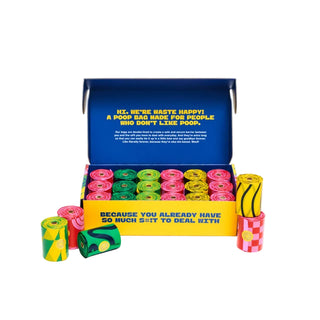
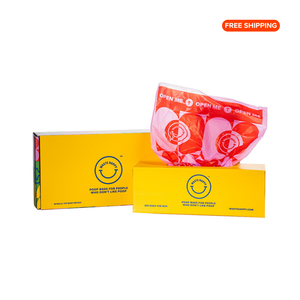
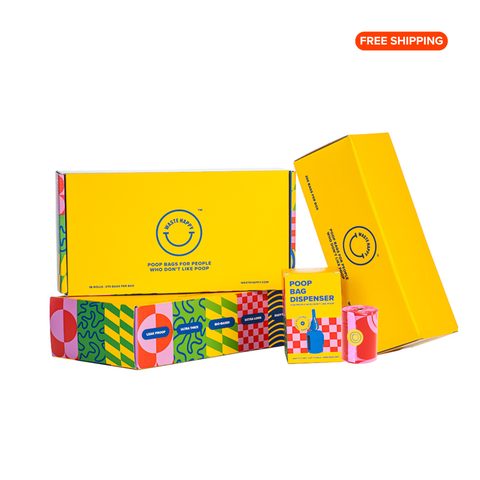
- Bags big and sturdy enough to cover your hand, with room left over to tie a knot. On a bad day, plan on two per stop. (Curious what the numbers on a box mean? Here is dog poop bag thickness, explained.)
- A few paper towels or napkins, folded into a pocket.
- A small spray bottle of water, if most of your walks are on pavement.
- Disposable gloves and hand sanitizer, if you like a backup plan.
Four moves that make it easier
- The inside-out grab. Slide your hand into the bag like a mitten and pinch from the outside edges toward the middle, so the mess gathers instead of spreading. Then hold the opening with your other hand and peel the bag back over your fist, so it flips inside out around the mess. Squeeze the air out and tie it low and tight. (Our knot method takes about four seconds.)
- The double bag. Put two bags on your hand, one over the other. Pick up as usual, then pull both off together, inside out. The mess ends up wrapped in two layers instead of one, which is a comfort when it is warm and wet. Tie the inner bag, then the outer one.
- Give it something to hold. Runny poop has nothing to grab, so bring the grip yourself. Fold a paper towel into your bagged hand and use it like a sponge, or scoop up a handful of dry leaves along with it. When the bag flips inside out, the towel or leaves go in with everything else. The CDC's Giardia cleanup steps for floors start the same way: absorb it, then bag it. We just took that outside.
- The spritz on pavement. After the bulk is up, concrete keeps a smear. A few sprays of water loosen it so a fresh paper towel can wipe it up, and that towel goes in the bag too. Skip the hose. Our reasoning: it just sends the smear toward the storm drain (more on why that matters below).
Surface by surface
You will never get a lawn spotless. The Merck Veterinary Manual notes in its section on parvo that outdoors, where full disinfection is not practical, removing the poop itself is important. So get the bulk, and get it fast.
In a leaf pile, the harder part is finding it. Watch where your dog squats and line the spot up with something that does not move. For snow, ice and frozen piles, our winter pickup guide has the whole routine.
Shoes and paws
Shoes. If you stepped in it, deal with it outdoors. Scrape the sole with a stick, scrub the treads with an old brush and soapy water, and let them dry outside. The CDC's Healthy Pets advice is to clean pet supplies outdoors when you can, never in a kitchen or bathroom sink, and we hold shoes to the same rule. The CDC also lists taking off soiled shoes as a time to wash your hands.
If your vet suspects parvo, soap alone may not cut it. Merck notes the virus resists many common detergents and disinfectants, and it lists specific ones that can double as a footbath for shoes. Ask your vet which to use. (More in how parvo spreads through poop.)
Paws. Wipe them before your dog comes inside. The AKC suggests pet-safe wipes for light messes and a warm, soapy washcloth for serious ones, and this counts as serious. Gently spread the toes as you go, then dry thoroughly.
The back end. Long-haired dogs can end up wearing some of it, so wash and dry that area too. The Companion Animal Parasite Council (CAPC) notes that dogs can pick up Giardia by grooming themselves, and its guidelines for dogs being treated for Giardia include a shampoo bath to wash off fecal debris.
Gloves and hands
The CDC says to wash up with soap and running water after any contact with dog poop, "even if you use a bag." No sink nearby? It suggests a hand sanitizer with at least 60% alcohol until you reach one.
Gloves are a nice extra layer, but still wash. For messes in the house, the CDC says to use disposable gloves and wash your hands thoroughly afterward, and we do the same outside. Peeling them off inside out is our tip. Until then, keep your hands off your face, as the CDC's Giardia page advises around animals, and ideally off your phone.
Why it still has to be picked up
Runny poop tempts people to shrug and keep walking. It is also the kind most worth picking up.
- Some germs are ready right away. CAPC calls Giardia infection common in dogs, and diarrhea is one of its possible signs, though most infected dogs show none. Its cysts are infective as soon as they are passed. Spread from dogs to people appears to be rare, CAPC says, but a dog that licks the spot, or steps in it and later licks its paws, could pick it up.
- Some germs wait. Roundworm eggs need 2 to 4 weeks in the environment before they can infect anyone, according to the CDC, and under the right conditions they can last for months or even years. The CDC's advice: pick up pet waste daily. Its Healthy Pets page adds: even in your own yard. (More in worms and other parasites in dog poop.)
- Parvo travels in poop. Merck says dogs catch it through contact with infected feces or with things those feces have touched. Young, unvaccinated or not fully vaccinated dogs are most at risk.
- It does not stay put. The EPA notes that stormwater can sweep pet waste off the ground and into nearby streams, lakes and rivers, either directly or through storm sewers. It calls pet waste "a leading source of nutrient and bacteria pollution in urban streams and waterways." Our take: a runny pile on pavement is first in line for the next rain.
- The rules still apply. Many communities have pooper-scooper laws, the EPA says, and some also require you to carry a bag or scoop whenever your dog is off your property. See whether skipping it is illegal and our state-by-state guide. Then there is the matter of someone else's trash can.
When runny poop is a health concern
One soft stool now and then is probably nothing to worry about, according to the AKC. If your dog is otherwise eating and acting normally, the emergency vet it quotes suggests an appointment with your regular vet. If there is blood, vomiting, a lost appetite or significant lethargy, she recommends the emergency clinic, and diarrhea that drags on or shows up in a puppy usually calls for tests. Our guide to why your dog's poop is runny covers the causes.
The bottom line
Bag over the hand, pinch from the edges, flip it inside out, soak up what is left, then wash. It will never be anyone's favorite part of the walk. It takes a minute, and the next person on that sidewalk will never know how heroic you were.
Double bagging means double the bags. Take the quiz to see how many your dog goes through in a normal month, or stock up so there is always a spare in your pocket.
This article is general information, not veterinary advice. If your dog's diarrhea has blood in it, comes with vomiting, lethargy or a lost appetite, keeps going, or shows up in a puppy, call your vet.
Sources
- Centers for Disease Control and Prevention, Healthy Pets: Dogs
- Centers for Disease Control and Prevention, Healthy Pets: Ways to Stay Healthy Around Animals
- Centers for Disease Control and Prevention, Giardia Infection Prevention and Control
- Centers for Disease Control and Prevention, How Toxocariasis Spreads
- Companion Animal Parasite Council, Giardia
- U.S. Environmental Protection Agency, Stormwater Best Management Practice: Pet Waste Management, February 2023
- Gallagher A., Canine Parvovirus Infection (Parvoviral Enteritis in Dogs), Merck Veterinary Manual, 2025
- American Kennel Club, Dog Diarrhea: Signs, Symptoms, and Treatments
- American Kennel Club, How to Care for and Clean Dog Paws and Paw Pads