



Is Pumpkin Good for Dog Poop? What the Evidence Actually Says
Pumpkin is the classic fix for loose or stuck dog poop. Here is what vets recommend, what the fiber research actually tested, how much fiber a spoonful really holds, and which pumpkins to skip.
Halloween is over. The candy is (mostly) hidden, the costume is back in the drawer, and the jack-o'-lantern on the porch is starting to slump. And somewhere in your pantry there may be a can of pumpkin, because sooner or later every dog owner hears that pumpkin fixes poop.
Loose stool? Pumpkin. Can't go? Also pumpkin. Here is what vets recommend, what the research tested (spoiler: not pumpkin), and why the jack-o'-lantern belongs in the trash, not the bowl.
The short answer
Maybe. Plain canned pumpkin is a common vet tip for mild diarrhea or constipation; the AKC says start small (1 to 4 tablespoons a meal). But we could not find a trial of pumpkin itself in dogs, and a tablespoon holds under half a gram of fiber. Skip pie filling and jack-o'-lanterns, and call your vet if it lasts.
Why vets reach for pumpkin
This one is not just internet folklore. The American Kennel Club says pumpkin's soluble fiber adds bulk to stool by absorbing water. VCA Animal Hospitals lists small amounts of canned pumpkin (not pie filling) among the diarrhea remedies your vet may suggest, because the fiber can help bind stool. And the Merck Veterinary Manual names pumpkin, alongside psyllium and wheat bran, as a fiber owners can add to canned food for constipation.
One food for both loose and stuck poop? The trick is water. Fiber holds onto it, which adds bulk to loose stool. In a constipated dog, Merck says, fiber softens the stool and adds bulk that helps the colon contract.
What the research actually tested
Here is the twist. We searched PubMed, the National Library of Medicine's research database, for trials of pumpkin as a fiber supplement in dogs and could not find one. The studies below are about fiber in general, and three of the four centered on psyllium husk, a soluble fiber sold as a powder; the fourth used it in 7 of 32 dogs.
Fiber does seem to help many of these dogs. But three of the four studies had no comparison group, so nobody can say how many dogs would have improved anyway. And in the one randomized trial, adding psyllium to an easily digested diet did not change the median. Our read: every group got the new diet, so the trial cannot show what the diet itself did, only that the antibiotic did not speed recovery.
So the honest claim is "fiber can help some dogs," not "pumpkin is proven." And as fiber goes, pumpkin has a dose problem.
How much fiber is in a spoonful of pumpkin?
Pumpkin does contain fiber. Just not a lot. According to USDA FoodData Central, plain canned pumpkin has 2.9 grams of fiber per 100 grams, about 7 grams in a whole cup. By our math, that is a little under half a gram per tablespoon.
For comparison, the Ohio State team behind the 2026 study estimated that 1 teaspoon of psyllium husk powder provides about 3 grams of fiber. That is roughly the fiber in 7 tablespoons of canned pumpkin (our math again).
Dr. Lisa Freeman, then head of the veterinary nutrition service at Tufts University's Cummings School of Veterinary Medicine, made the same point in a 2017 article. The quarter teaspoon to 2 tablespoons people typically give at meals "may not help," she wrote. To match the fiber in one high-fiber therapeutic diet, a medium-sized dog would need nearly 12 cups of pumpkin a day.
Twelve cups. A day. Please do not. Freeman warned that a lot of added fiber can cut how much protein and other nutrients a dog absorbs, and that pumpkin calories above 10% of the day's total can unbalance the diet. If your dog needs serious fiber, she advised asking your vet about a fiber supplement or a therapeutic diet.
How much pumpkin should I give my dog?
If your vet says yes, here is how the sources say to do it:
- Buy plain canned pumpkin. Per the AKC, the label should say pumpkin and nothing else, since added salt, sugar or spices can irritate the stomach. Freeman noted that some salted cans carry nearly 600 milligrams of sodium per cup, too much for a dog with heart or kidney disease.
- Start small. The AKC suggests 1 to 4 tablespoons per meal; Merck gives that range for constipation. Neither breaks it down by size. Ask your vet where your dog fits, and start low, as the AKC suggests.
- Water first. Merck says a dog should be well hydrated before starting fiber, to lower the chance it gets impacted in a constipated colon.
- Give it a short trial. VCA says to call your vet if diarrhea has not improved within 2 to 3 days.
Plain, cooked pumpkin is also on our list of fruits dogs can eat. (Yes, fruit. The AKC calls it one.)
Pie filling, the jack-o'-lantern and other pumpkins to skip
Pumpkin pie filling. Check the can before you open it. USDA lists canned pumpkin pie mix at 104 calories per 100 grams, against 34 for plain, and Freeman put the difference down to added sugar. The AKC adds that nutmeg is toxic to dogs in larger quantities.
You may also have heard that pie mix contains xylitol, a sweetener that is toxic to dogs. The AKC says it may. Every pie mix label we found in USDA's database of branded foods listed sugar, not xylitol, but the AKC warns that pumpkin spice baked goods may contain xylitol, raisins or chocolate. Read the label, and keep pie and pie mix out of the bowl.
The jack-o'-lantern. Our Halloween safety guide covered the candle. The day after, the problem is mold. The ASPCA warns that mold on pumpkins, carved ones most of all, could cause tremors or seizures in dogs, and suggests tossing jack-o'-lanterns, ideally before mold shows up. The Merck Veterinary Manual explains why: some molds on food and food waste, especially Penicillium, make toxins that cause vomiting, tremors and seizures in dogs, and signs can start within an hour or two.
If your dog ate any of a moldy pumpkin, call your vet or the ASPCA Animal Poison Control Center at (888) 426-4435 right away. The ASPCA says signs can come on very fast. And put the old pumpkin where your dog cannot dig it back out: Merck's prevention advice is to keep dogs away from moldy food and food waste, compost included.
Raw chunks, the rind and the stem. Even a fresh pumpkin is no porch snack. The AKC suggests roasting it and feeding the peeled flesh, and its chief veterinarian, Dr. Jerry Klein, says squash, pumpkin included, is safe for dogs "provided seeds, skin, and rinds have been removed." VCA warns that thick skins, rinds and stems can cause choking or a gut blockage, and its guide to constipation in dogs names eating indigestible things like plant matter or bones as the most common cause. Not the result you were after.
With Thanksgiving coming, the same rules cover the pie on the counter. Here is our guide to Thanksgiving foods that are safe for dogs.
When to skip the pumpkin and call the vet
The AKC's own pumpkin article puts it plainly: "Before you reach for that can of pumpkin, you first need to figure out the cause of your dog's diarrhea." Pumpkin is for mild, non-serious cases, it says, and no substitute for a vet in severe ones. Call your vet instead of opening the can if:
- Your dog seems sick. The AKC says diarrhea with lethargy, fever, vomiting or weakness means calling right away. VCA adds a dog that stops eating or seems uncomfortable.
- There is blood, or the poop is black and tarry. VCA says to get care right away. (Here is what black poop can mean.)
- It is a puppy. The AKC says to treat puppy diarrhea as a possible emergency, every time.
- No poop in 2 or 3 days. VCA says to call if your dog has not pooped within 48 to 72 hours of the last time. (Here is how often dogs normally go.)
- Straining with little to show for it. A constipated dog straining hard may pass a little liquid that gets mistaken for diarrhea, VCA notes. The AKC says the cause could be an enlarged prostate, foreign material or bones in the colon, which can be emergencies. And VCA says some dogs need a low-fiber diet, not a high-fiber one.
- The cause is something pumpkin cannot touch. Diarrhea shows up with everything from parasites to parvo, the AKC points out. If you spot something wriggling, read up on worms in dog poop.
- Your dog raided the candy bowl. The ASPCA warns that any chocolate can seriously harm dogs, and sugar-free candy with xylitol can cause serious problems. Call your vet or poison control, not the pumpkin. Here is how much chocolate is toxic to dogs.
For the full rundown on loose stool, read why is my dog's poop runny.
So, is pumpkin good for dog poop?
Our honest answer: worth a try for a mild case, with your vet's okay. The AKC calls it useful and affordable, most dogs enjoy it, and fiber can help. But the research is about fiber, not pumpkin, and a tablespoon of pumpkin carries under half a gram of it. Plain can, small spoon, plenty of water, and a vet call if things are not better in 2 to 3 days.
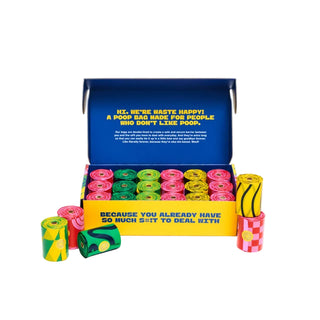
Whatever the pumpkin does, you will be the first to know, on the next walk. Take the quiz to see how many bags your dog actually needs each month, or grab a box so an unpredictable week does not catch you short.
This article is general information, not veterinary advice. Talk to your vet before using pumpkin, and call right away for bloody diarrhea, vomiting or lethargy, a puppy with diarrhea, or no poop in 48 to 72 hours. If your dog ate moldy pumpkin, call your vet or the ASPCA Animal Poison Control Center at (888) 426-4435.
Sources
- U.S. Department of Agriculture, FoodData Central: Pumpkin, canned, without salt, Pumpkin pie mix, canned and Branded Foods
- American Kennel Club, Can Pumpkin Help With Dog Diarrhea?, Can Dogs Have Pumpkin Spice?, Can Dogs Eat Squash? and Fruits and Vegetables Dogs Can or Can't Eat
- VCA Animal Hospitals, Eight Home Remedies for Diarrhea and Two That Could Be Dangerous for Your Pet, Constipation in Dogs and Can You Feed Pets Certain Fruits and Veggies
- Merck Veterinary Manual, Constipation, Obstipation, and Megacolon in Small Animals and Tremorgenic Neuromycotoxicosis in Dogs
- Lisa Freeman, Cummings School of Veterinary Medicine at Tufts University, People Like Giving Pets Pumpkin, but Is It Good for Them?, Tufts Now, October 3, 2017
- ASPCA, Pet Parents: Beware of These Four Fall Toxins, Animal Poison Control Alert: The Dangers of Moldy Food and Halloween Safety Tips
- Leib MS. Treatment of chronic idiopathic large-bowel diarrhea in dogs with a highly digestible diet and soluble fiber: a retrospective review of 37 cases. Journal of Veterinary Internal Medicine, 2000; 14(1): 27-32
- Alves JC, Santos A, Jorge P, Pitães A. The use of soluble fibre for the management of chronic idiopathic large-bowel diarrhoea in police working dogs. BMC Veterinary Research, 2021; 17: 100
- Rudinsky AJ, Parker VJ, Winston J, et al. Randomized controlled trial demonstrates nutritional management is superior to metronidazole for treatment of acute colitis in dogs. Journal of the American Veterinary Medical Association, 2022; 260(S3): S23-S32
- Ford-Hrymak DB, Rudinsky AJ, Muirragui I, et al. Increased dietary fiber intake improves fecal and clinical activity scores in dogs with chronic enteropathy. Journal of the American Veterinary Medical Association, 2026; 264(8): 1060-1066